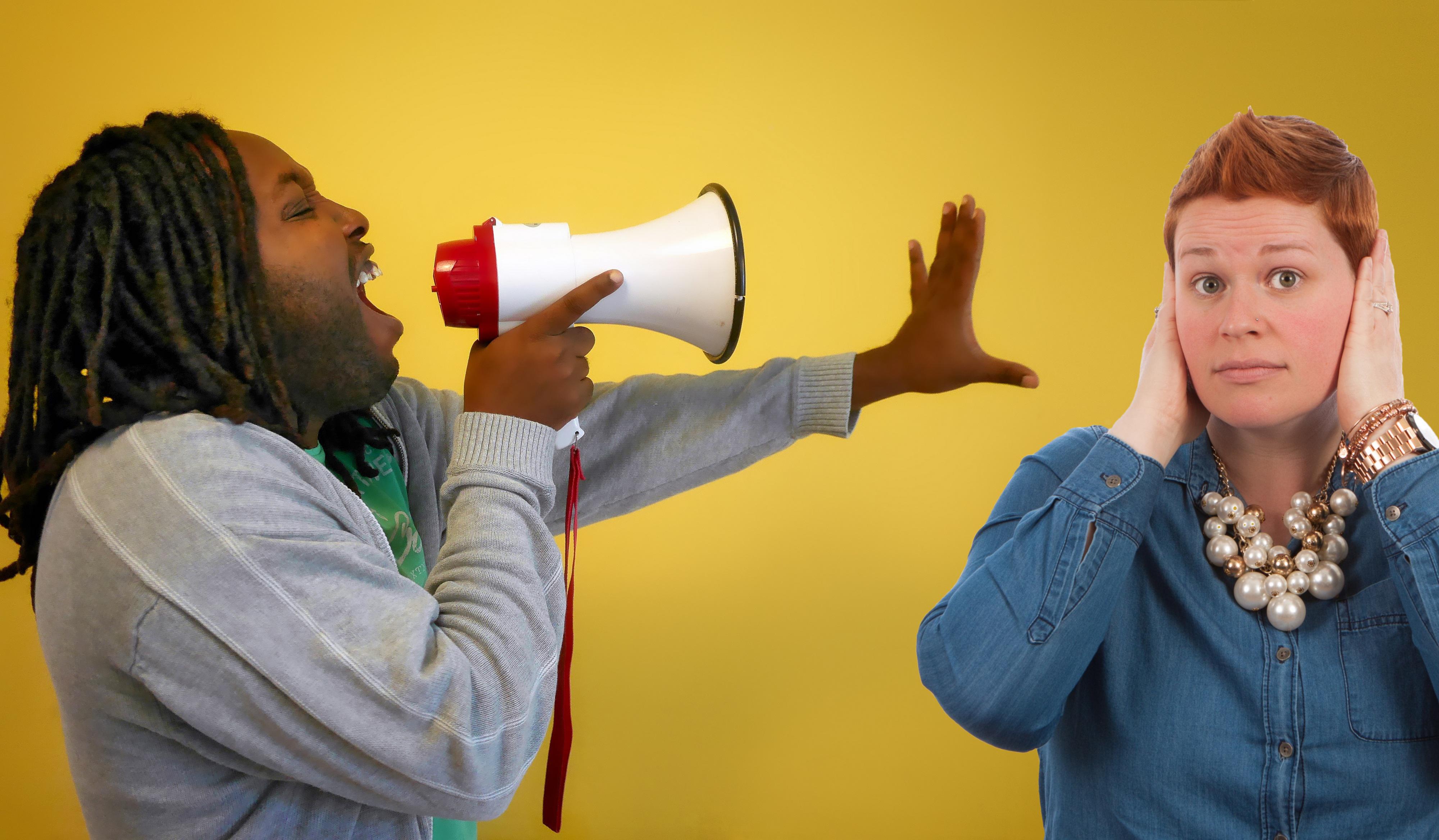
As I sit in my office at the church building where I serve I can hear a man shouting very loudly in the street outside. I can’t hear what he is bellowing but his tone is very aggressive and I can hear a female voice being drowned out by his shouts. It is distressing to hear and made me think about why we shout.
In this case it sounded like the man was trying to assert his dominance over others. By shouting loudest he could ensure that his voice was heard, even if it wasn’t being listened to. I suppose it was a form of verbal assault. That doesn’t just happen on the street outside my office – it can take place in homes, in businesses, in school playgrounds and wherever one person considers that others don’t matter as much as they do.
People shout slogans when they are protesting. I have often wondered about whether it makes any difference to those who are the object of the protest. Shouted protest slogans seem to me either to be lacking originality: “What do we want? Better slogans! When do we want them? Now!” or are not very effective at making change. If I am honest, chanting a slogan seems a little bit antiquated, and in my view need a critical mass of shouters if they are not to sound silly and that often seems to be lacking.
We shout warnings to people in danger. If we see someone about to step out into the road in front of a bus it requires an urgent and loud shout to get that person’s attention: “I say, you there, I think you ought to rethink your plan to cross the road right now…” probably will be too quiet, too much and too late.
Anyone who has been in a sports stadium (or even watches on the TV) when the team they support is doing well will have heard lots of shouting and cheering. It’s quite inspiring to experience this. However there seems to be an etiquette to it that is about where you are in the stadium. I was at a match a while ago sitting near the back of a section and a young man nearby spent the whole match shouting: “Who are you?” “Come on you blues!” “Blue army!” and so on. Nobody joined in. I felt was embarrassing for him, but give him his credit he was undaunted and kept going throughout the match. When the same shouts came from the middle of the same section everyone joined in.
Voices from the margins are often ignored, even if they are shouted in the hope that they will be heard. That’s not only true for crowds, it’s true of society (and it’s true of churches). Those at the centre of things are listened to much more than those on the fringe. But just because you’re in the centre or are loudest doesn’t mean you’re right.
In the Bible God often seems to shout through voices from the margins because those in the heart of things are getting it wrong and listening to themselves. John the Baptist (the one whose job it was to get people ready for Jesus) was described as ‘a voice calling in the desert’ (deserts being places where few people lived). John shouted about injustice and religious hypocrisy and he got arrested and beheaded, but not before lots of people had heard him and responded.
We should pay attention to what the voices from the margins are shouting today.
Where immigration and seeking asylum have been politicised and demonised by right wing politicians as the root of all evil, the voice from the margins shouts that these are people who deserve dignity not to be vilified. The voice shouts that the problems in society that matter to people are not caused by immigrants and asylum-seekers despite the lies of some politicians.
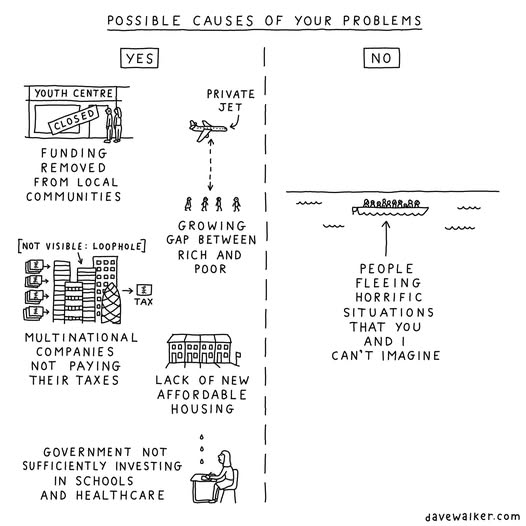
In countries that have slashed international aid budgets to focus expenditure on themselves the voice from the margins shouts to their politicians of the relative wealth of their country compared to those who had received the aid. It shouts that if you want to encourage people not to come to your country fleeing poverty, famine and conflict you need to invest in their countries to improve the situation.
Where politicians introduce policies that make the rich richer while the poor become poorer, and public services are overstretched and underfunded, the voice from the margins shouts that reinforcing such inequality is shamefully indefensible. Greed is not good. Greed is a false god.
To churches that declare that some people are not as important because of their sexuality, gender identity, gender, ethnicity or other labels (although few would ever say that in so few words) the voice from the margins shouts that God’s love does not have any exclusion clauses – God’s love embraces all.
Be blessed, be a blessing
 nukelearfishing
Leave a comment