There are many different sub-genres within the arts. Paintings are categorised into many different styles such as realism, surrealism, abstract, and so on. Sculptures include classical (ancient Greek or Roman, for example), kinetic (moving) and assemblage (like a 3D collage of everyday items). Even stand-up comedy has different approaches such as observational, satirical and one-liners. So it won’t surprised you that within the art of magical illusions there are different sub-genres.
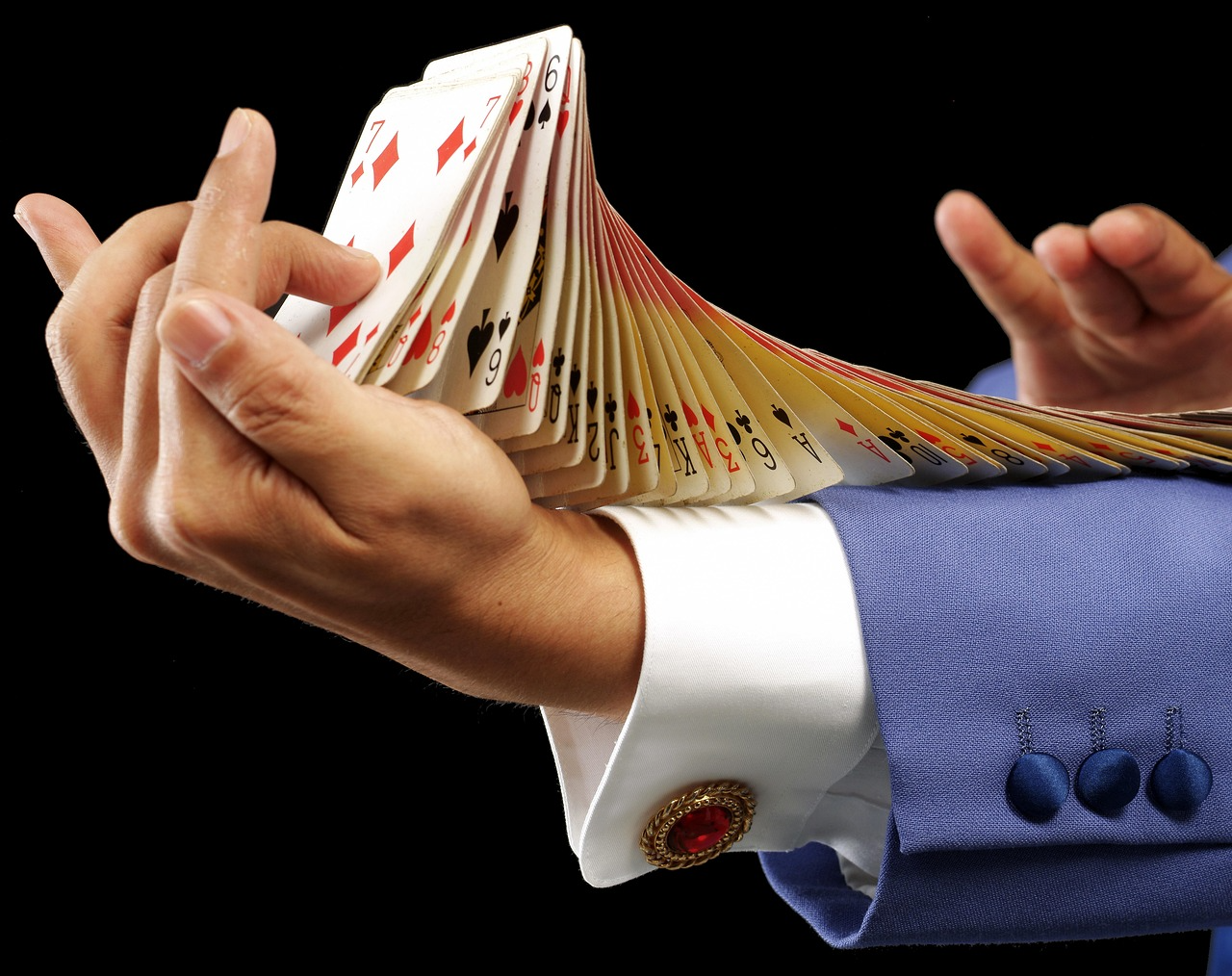
Perhaps the easiest way of dividing them is by the audience – stage (the effect is big enough to be seen by a live audience and is, unsurprisingly, performed from a stage or stage area), parlour (for a medium-sized, more intimate audience) and close-up (for a few people, performed right under their noses). In anticipation of a booking coming up to perform some close-up magic at the tables during a fundraising banquet I have been brushing up my close-up magic routine. I won’t be telling you any secrets, but here are some of the things I have to consider:
Space (the final frontier). Banqueting tables are laid out for the guests to have enough space to sit and eat comfortably, but that doesn’t usually include space for a magician to have lots of room to lay out their illusions.
Layout. The tables may be round, which affords most people a view of what’s going on, or square/rectangular, which means that some people have a restricted view. Choosing where to stand at the table is important.
Cleanliness. It helps a lot when performing close-up magic to have a cloth or a mat on the performance area, but if you rely on the tablecloth it’s possible that there will be drink or food spillages on your performance area, which makes using playing cards very difficult (is this your gravy stain on this card?). I have bought myself a lovely performance mat which is mounted on wood so that it provides both a clean and stable area in which to perform.
Baggage. You have to carry everything you need with you. Ideally I want to have it all in the pockets of the outfit I am wearing but I have to remember which pocket contains what. I also have to remember to put things back in the same pocket from which I retrieved them. And jackets, trousers, waistcoats, only have so many pockets. That limits the amount I can load onto myself.
Time. The length of the event does not necessarily equate to the amount of performance time. If I accept that the performance will be limited to the seated mealtime, then perhaps I have 1.5 to 2 hours. I have to divide that between the number of tables, allow for transition time between tables, and allow for time (and space) for the serving staff to serve the courses and clear away the plates between courses. Everyone should have the opportunity to experience an equal amount of magic.
Servers. The servers have a job to do – to serve the food and drink and clear away empties. They don’t need me getting in their way, and it can be distracting for an audience if they come and start clearing up while I am performing an illusion. I will usually try to speak to the head waiter (or whoever is in charge) to find out if all tables are served simultaneously or if the servers will work their way through the room. If it’s the former, I will step away while it happens. If it’s the latter I’ll ask if the servers can leave my table until last to give me time to conclude.
Breaks. It’s tiring (and in this weather probably hot) work performing constantly during an evening. I try to take a break while the servers are clearing plates and serving dishes, and ensure I have enough water to drink close at hand.
Noise. Is there a band or music playing in the background with which my voice will have to compete? I once performed close-up at a charity event for a friend and hadn’t been told that there was also a DJ playing at the same time. It’s not so magical if you have to shout at the people around you as you perform, and my voice was hoarse afterwards.
Audience. Having been booked for an event I imagine most people will be aware that there is a magician roaming around and are at worst tolerant of me, hopefully they’re keen to see me. But just occasionally you can come across someone who’s antagonistic. You have a choice then – either to ignore them, try to include them, or move on. It’s only happened on one occasion when I was with a group of magicians performing close up magic around tables where one of the guests was a bit tipsy and became belligerent. Our leader apologised to the rest of the table and said that we wouldn’t be performing at that table because we didn’t want to cause a scene, but if they wanted to see some magic we would be performing elsewhere in the venue.
Spares. Some illusions consume the materials I use. For example, if someone signs a playing card I will usually give it to them at the end (assuming I find it again) as a souvenir. But then I have to replace that card in the deck if the deck is to be complete. Have I brought enough spares for the number of times I’ll be performing that illusion?
There are other things to consider as well, but you’re probably bored by now so I will move on to one more…
Magic. You’ll notice that I haven’t talked yet about the type of illusions I usually perform. I try to have a range of different illusions so that if someone doesn’t like card tricks (for example) they don’t have to sit through a series of card routines. The illusions I perform need to be visible to all at the table (ie not too small), small enough to fit in pockets (or whatever I am carrying them in), and most of all give the audience a magical experience. Planning and preparing that takes a lot of time and thought.
And you thought I just rock up with a deck of cards and go ‘pick a card, any card’…
I think it’s often the case that the things we think look most effortless have been prepared meticulously in advance. The European Athletics Championships have just finished and there were so many incredible performances by the athletes. When the runners cruised across the line in first place with hands raised, of the throwers launched their missiles huge distances, they didn’t just turn up that day and decide to have a go. Unseen to all of us behind the scenes is years of coaching and training, exercising, improving technique, and probably literally blood, sweat and tears.
So what about life? It’s not as if we have an opportunity to have a practice before the real event, is it?
Except, I think we do. We’re all works-in-progress. We’re not static, we learn and grow. The Bible has a list of 9 virtues which God’s Spirit grows in us – love, joy, peace, patience, kindness, goodness, faithfulness, gentleness and self-control.
How do those things grow? By us choosing to use them, to put them into practice. And each life event we have where we have responded with one or some of those virtues is a practice for the next one. God’s Spirit helps us to use them, perhaps prompts us to do so, and enhances the effect of them in us and those around us, but they grow by being used. Like preparing for my table magic performance, we can try to anticipate moments when we might need to respond in those ways and prepare ourselves for them. We can consider some of the things around us that may make us tend not to perform at our best and work out ways to ensure they don’t disrupt us.
They’re called ‘the fruit of the Spirit’ but we’re not the soil, we’re spiritual gardeners alongside the head gardener (the Spirit) and the soil is the life events and the lives of those around us. That’s where they’re seen and grow.
Be blessed, be a blessing


Leave a Reply